Showing posts with label olympics. Show all posts

Monday, May 4, 2020

History of Cancelled Events

With Covid-19 ravishing the event calendar to a degree unprecedented all over the world, I paused to consider - has there ever been a time like this before? The short answer is, no. There has never been a time as detrimental to the flow of events in the United States as the 2019 pandemic we are currently facing. Although, we have taken significant changes in course when it comes to terrorism, and natural disaster. How did we see the light at the end of the tunnel, then? Here is the rundown on some of the most significant events cancelled historically in the U.S.A.

If we know one thing about Americans, it is that a large number of us love sports. Whether or not you fit into that category, perhaps these events will ring a bell:

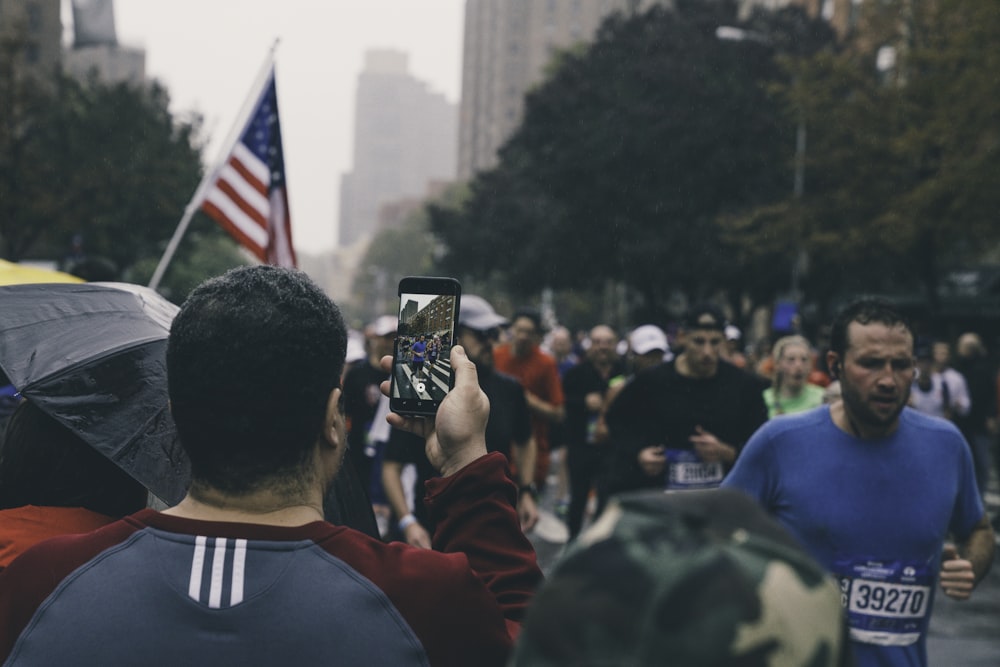
The New York City Marathon has been held annually since 1997. Even the tourist attacks of September 11th, 2001 did not offset the popular race. It has been a force of community and uniting people in the big apple, but that changed for a brief moment in 2012 amidst the aftermath of Hurricane Sandy. It was a moment of contention for city officials and runners alike, most of which had arrived from all over the country to partake in the race already. In the end, the point that city funds should be allocated for disaster relief must take precedent over hosting the race, and the New York City Marathon, for one year, dissolved. It is, of course, back up and running today.
group of people running on street

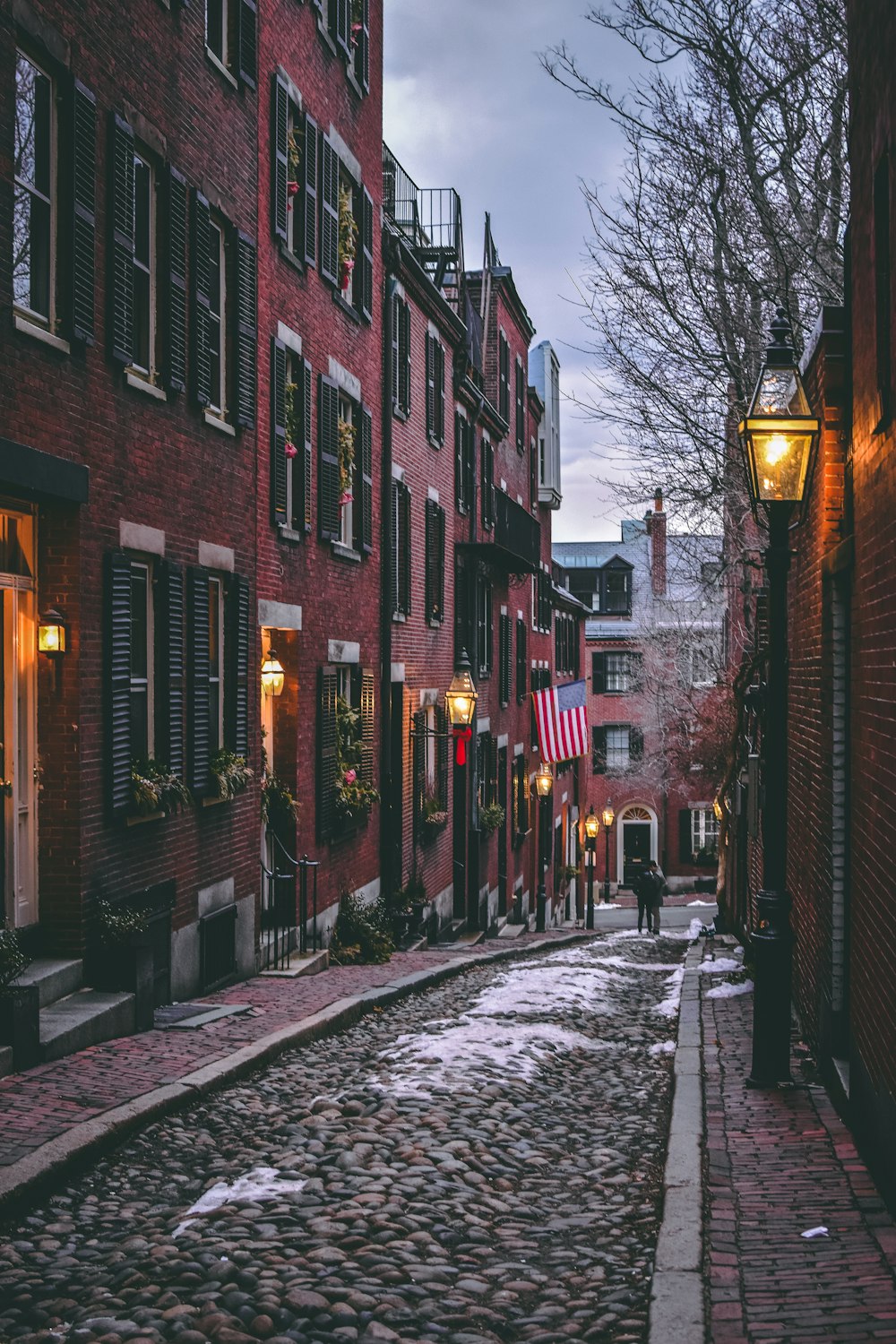
The next year, in 2013, yet another marathon faced a less difficult decision, but perhaps more significant need to cancel its race. That year, The Boston Marathon was subject to a disheartening terrorist attack. Two brothers placed bombs close to the finish line of the race. Three runners were killed, and 260 people were injured in the incident. Of course, the race came to an immediate halt for the runners still participating and nearing the finish line.
USA flag on street during daytime

Weather and terrorism have caused the largest number of cancelled events in the history of the United States. The pandemic scenario is new, and we are forced to grapple with it.  Tokyo's Olympic Games will be postponed, but the fate of many other events is unknown as the world waits. Fortunately, waiting at home in our Pyjamas while our essential workers fight on the front lines, keeps us safe from harm, even if it means we don't have as many sports to watch.

people walking on road near well-lit buildings


Saturday, January 23, 2010

Traveling to Canada for the Olympics? Check your documents.

New travel document requirements will affect people travelling from the USA to Canada for the Olympics. Generally a valid passport should do the trick as well as special WHTI travel documents. If you are not clear on requirements you should read this and contact authorities to make sure you won't have problems returning to the US after the Olympics:

Returning to the U.S. after the Vancouver 2010 Olympic Winter Games

Vancouver is expected to be a popular destination for U.S. citizens during the Vancouver 2010 Olympic Winter Games. Under the Western Hemisphere Travel Initiative (WHTI), U.S. citizens entering the the U.S. by air, land or sea from Vancouver or elsewhere in Canada must have a WHTI-approved travel document. Please allow several weeks for new document application and processing before leaving for Vancouver.

Arriving in the U.S. by Air
When returning home from Vancouver by plane you are required to present a U.S. passport, with these exceptions.

Entering the U.S. by Land
If you are a U.S. citizen driving, taking a bus or train back from Vancouver into the U.S., you are required to present a U.S. passport, U.S. passport card, enhanced driver’s license (EDL) or Trusted Traveler Program card. Some travelers may be part of the WHTI Special Groups in which case travel document requirements may be different.

Traveling to the U.S. by Sea
Travelers taking a ferry or small boat back to the U.S. from the Vancouver area must have a U.S. passport, U.S. passport card, enhanced driver’s license (EDL) or Trusted Traveler Program card. Some travelers may be part of the WHTI Special Groups in which case travel document requirements may be different.

The above information is for U.S. citizens on their way home from Vancouver or another destination in Canada. Canadian and Mexican citizens should access the appropriate WHTI information by clicking country of citizenship on the map on the home page.

Please allow four to six weeks to process your WHTI-approved travel document.


http://www.cbp.gov/xp/cgov/travel/

Winter Olympics in British Columbia, Canada

Here's the official olympic website for the Winter Olympics in Vancouver and surrounding areas of British Columbia, Canada:

http://www.vancouver2010.com/olympic-tickets/olympic/

The ticket process is based on several factors designed to make it fair and offer opportunities to everybody. You'll probably find that popular events are prohibitively expensive in the auctions, so consider attending practices to get the feel of the Olympics and then watching the finals on TV along with the rest of the world.

Sunday, July 6, 2008

Beijing Olympics Notes

Here are some very interesting stats from the New York Chinese Consulate about the upcoming Beijing Olympics:

Official Olympics Website is here


Beijing will host the 2008 Olympic Games on August 8, 2008. Now Beijing is making a great effort to use every day available to ensure that it will be a "High level Olympic Games with distinguishing features." The following are some issues about the 2008 Olympics which you may be interested in.

Olympic venue construction is one of the fundamental works for a successful Olympiad. The 2008 Beijing Olympic Games will begin on August 8, 2008, and will run for 16 days. Throughout this period, athletes from 203 National Olympic Committees will compete in 28 sports to win 302 gold medals. All these competitions will be held at 37 venues. Six of them are located outside of Beijing in the city of Hong Kong for equestrianism, Qingdao for sailing, and Shanghai, Tianjin, Qinhuangdao and Shenyang for football preliminaries, whereas the remaining 31 are all in Beijing, including 12 new venues, 11 renovated venues and 8 temporary venues.

At present, Olympic venue construction is in good progress. All of the construction projects will be completed by the end of 2007. Various test events will be held to ensure their readiness for the Olympics.

As for ticket sales for the Olympic Games, according to BOCOG (Beijing Organizing Committee for the Games of the 29th Olympiad), there are 9 million tickets available. Over 7 million tickets from these will be available for sale. About 20 to 25 percent of these tickets will be sold abroad. According to the ticketing policy, the prices for sports sessions will range approximately between 4 to 130 US dollars. For preliminary competitions, the price will be between 4 and 40 US dollars, while for the finals, the range will be between 8 and 130 US dollars. The lowest priced ticket for the Opening Ceremony will be about 25 US dollars, while the highest priced ticket will be 650 US dollars. The lowest price for the Closing Ceremony will be about 20 US dollar, and the highest will be 400 US dollars.

For the preparation of accommodations, it is estimated that about five hundred thousand (500,000) to five hundred and fifty thousand (550,000) foreign visitors will go to Beijing during the Olympic Games. Fifty thousand (50,000) of them will be members of the Olympic family, and about two hundred and sixty thousand (260,000) to three hundred and twenty thousand (320,000) visitors will be spectators. They will be joined by about one hundred and fifty thousand (150,000) to two hundred thousand (200,000) regular visitors. In view of these, visitors' accommodation has become a concern.

However, Beijing has the necessary accommodation capacity to satisfy visitors' needs for the Olympics and more. Beijing currently has a total of 4723 accommodation facilities. 700 of them are star-rated tourist hotels and 4023 of them are not rated properties. In addition, 80 hotels are under construction and renovation, and will aspire to become star-rated properties. All together, the daily accommodation capacity for Beijing will be over two hundred eighty six thousand and nine hundred (286,900) rooms or five hundred seventy two thousand and five hundred (572,500) beds.

Room rates: from the 112 properties contracted by the Beijing Organizing Committee for the Games of the 29th Olympiad (BOCOG), the average rate for a five-star hotel room will be about US$429 per room night and US$353 for a standard room, while that for a four-star hotel room will be US$305 and US$272 for a standard room, and for a three-star US$193 per room night and US$176 for a standard room.

As for transportation, Beijing is constantly improving the transportation facilities. Beijing is upgrading and enlarging its international airport, and is building a new subway system and 8 new expressways to ease traffic. In 2008, there will be 718 kilometres or 446 miles of expressways-up from the present 500 kilometres or 311 miles; and the total travel distance of the subway and light-rail system will increase from 114 kilometres or 71 miles, to 300 kilometres or 186 miles. In addition, the traffic management department of Beijing City will adopt a plan to allow for special dedicated traffic lanes for the Olympics. This will ensure that people can quickly and safely get to and from the competition venues in good time.

About the General Policy for Volunteers of the Beijing Olympic and Paralympic Games: A total of 70,000 volunteers are required for the Beijing Olympic Games while about 30,000 volunteers will be needed for the Paralympics. Volunteers for these games will mainly be recruited from college students studying in Beijing. There will also be a certain number of volunteers from the overseas Chinese community, foreigners and international students in China, Hong Kong, Macao, Taiwan and the various provinces, municipalities and autonomous regions of China. The volunteer application has started from August 2006 and shall end in March 2008. Applications from the overseas Chinese community, foreigners and international students in China, Hong Kong, Macao, and Taiwan will start only from March 2007. Although this last group of volunteers is an integral part of the Beijing Olympic and Pralympic Games, their specific numbers shall be determined based on situational needs.

For more information about the 2008 Beijing Olympics, please visit en.beijing2008.cn